lunes, 18 de septiembre de 2017

NARRATIVE TEXT

NARRATIVE TEXT

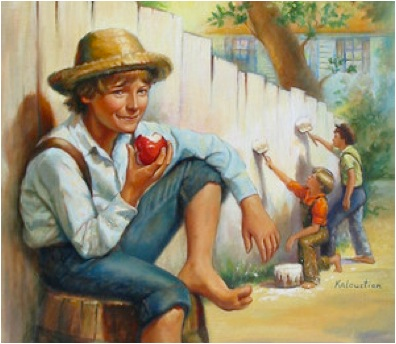
         Resultado de imagen para images of tom sawyer characters                   Resultado de imagen para images of tom sawyer characters

Definition of narrative
Prince: “The representation . . . of one or more real or fictive events communicated by one, two or several . . . narrators . . . to one, two or several narratees.”
A narratee is a person or character to whom a narrative is addressed.
The definition of narrative text

Narrative text is a story with complication or problematic events and it tries to find the resolutions to solve the problems. An important part of narrative text is the narrative mode, the set of methods used to communicate the narrative through a process narration.

The purpose of narrative text

The Purpose of Narrative Text is to amuse or to entertain the reader with a story.

Generic Structures of Narrative Text
1) Orientation

Sets the scene: where and when the story happened and introduces the participants of the story: who and what is involved in the story.

2) Complication

Tells the beginning of the problems which leads to the crisis (climax) of the main participants.

3) Resolution

The problem (the crisis) is resolved, either in a happy ending or in a sad (tragic) ending

4) Re-orientation/Coda

This is a closing remark to the story and it is optional. It consists  of  a  moral  lesson,  advice  or  teaching  from  the writer.

Elements of narrative structure

Plot
•         Sequence of events involving characters in conflict situations.
•         Plot is based on the goals of one or more characters and the processes they go through to attain these goals.
•         Beginning, middle, end or introduction, problem, and resolution
Characters
•      The people or personified animals who are involved in the story.
•      Fully developed characters have many character traits
•      Appearance
•      Action
•      Dialogue
•      Monologue
Setting
Components of setting:
•      Location
•      Weather
•      Time Period
•      Time of Day
Theme
•      The underlying meaning of a story.
•      Truths about human nature.
–     Characters’ emotions and feelings
–     They can be explicit (stated openly) or implicit (suggested)
Point of view
First Person
–     Story is told through eyes of one person
–     Reader experiences story as the narrator views it
–     Found mostly in picture books
Third Person
–     Used so readers can know the viewpoint of one character
–     The author is godlike: sees and knows all
–     Found mostly in chapter books


domingo, 17 de septiembre de 2017

PRESENT PERFECT

PRESENT PERFECT


Resultado de imagen para IMAGENES DE ALGUIEN BUSCANDO UNAS LLAVES


Mary is looking for her key. 
                     She can`t find it. She has lost his key                        
                               
Pronouns
Auxiliary
Verb in Past Participle
I
have
worked
You
have
studied
He
has
done
She
has
written
We /  You  /  They
have
been

The present perfect simple is HAVE /  HAS  +  PAST PARTICIPLE. The past participle often ends in -ED  (finished /  decided  / lived etc), but many important verbs are irregular (lost / been / written etc).

When we use the present perfect there is always a connection with now. The action in the past has a reuslt now:

He told me his name but I have forgotten it. (I can`t remember it now)
Is Sally here? No, she is gone out (she is out now).

We often use the present perfect to give new information or to announce a recent happening:

The police have arrested two men.

You can use the present perfect with JUST,    ALREADY, and YET

JUST= a short time ago

Would you like something to eat?  " No, thanks, I have just had lunch"

We use ALREADY to say that something happened sooner than expected

What time is Mark leaving?  He`s already gone

YET=   "until now" and shows that the speaker is expecting something to happen. Use YET only in questions and negative sentences.

I have written the letter but I haven`t posted it yet.      


martes, 5 de septiembre de 2017

PREPOSITIONS OF TIME


                                                                               Resultado de imagen para images of the days of the week                    Resultado de imagen para images of months of the year

PREPOSITION OF TIME

We use:

 AT for the time of day:

at five o`clock                at 11:45             at midnight              at lunchtime                at sunset

We use AT in these expressions;

at night                                  at the weekend(s)             at Christmas                       at Easter       
at present                              at the same time               at the moment

Examples:                I don`t like going out at night                                                                                                            Will you be here at the weekend?


We use:
ON   for days and dates:

On Friday (s)         On 12 March 1991      On Christmas night             On my birthday

Examples:      I will be at home on Friday morning.
                       Do you usually go out on Saturdays evenings?

We use:

IN for longer periods (for example months / years / seasons):

In October                    In (the) winter                       in 1968                          in the 1970s           

In the 18th century      In the Middle Ages               in the past                    in (the) future


We say:

In the morning(s)                 in the afternoon(s)                     in the evening(s)

Examples:  I will see you in the morning

                  Do you work in the evenings?

We do not use at / on / in before last / next / this / every:

Example: I will see you next Friday
                They got married last March.


In a few minutes /  in six months, etc. = a time in the future
                          
Examples;     The train will be leaving in a few minutes
                      She will be here in a moment.

We also use in... to say how long it takes to do something:

I learnt to drive in four weeks ( it took me four weeks to learn).